PV stands for 'Photovoltaics' and means converting light into electricity (as opposed to Solar Thermal which is heating water).
The solar panels generate DC electricity from sunlight which is fed through an inverter to convert it into AC electricity.
The inverter is connected to your consumer unit (fuse board) so the electricity can be used in your home.
Solar PV systems use cells to convert sunlight into electricity. The PV cell consists of one or two layers of a semi conducting material, usually silicon. When light shines on the cell it creates an electric field across the layers causing electricity to flow. The greater the intensity of the light, the greater the flow of electricity.
PV cells are referred to in terms of the amount of energy they generate in full sunlight; known as kilowatt peak or kWp.
On days of high solar availability there will be a considerable volume of energy produced which you may not be able to use. Your PV system will be connected to the electricity grid so that the grid can take any excess electricity that you cannot use.
Here are the main components of your PV system:
A typical solar energy system:
Solar photovoltaic (PV) panels
A photovoltaic (PV) panel, also known as a module, is a unit consisting of special cells that generate an electric current in sunlight that are linked together. When the sun shines over the cells, an electric field is created. The stronger the sun, the more electric energy is produced. Nevertheless, the cells do not need direct sunlight to work, and they can still produce electricity on a cloudy day.
A group of modules wired in series is called a string. The string determines the operating voltage of the system which is of great importance to your voltage drop and inverter type. The cell, the modules and the string formation leads to the end result which is the Array.
The Inverter
The solar inverter is one of the most important components of the solar PV system and is the brain of the system. Generally located in the loft space, it converts the direct current (DC) output into alternating current (AC). The power from the array, converted by the inverter, is then connected via isolators – one on the DC (PV module) side and another on the AC side - into the consumer unit via an MCB (miniature circuit breaker).
Generation Meter
The generation meter is where you will be able to monitor what your system is generating. The meter will have a flashing red light when your system is generating, the brighter the day the faster the flashes will be.
Export Limiters (if applicable)
During times of non-consumption of electricity generated there will be a supply of excess electricity. This is usually exported back to the grid. However, on some occasions this export will not be accepted by your District Network Operator. In these cases, an export limiter must be installed. The export limiter caps or completely stops this exportation. The export limiter is fitted next to your consumer unit.
Cabling and connectors
During times of non-consumption of electricity generated there will be a supply of excess electricity. This is usually exported back to the grid. However, on some occasions this export will not be accepted by your District Network Operator. In these cases, an export limiter must be installed. The export limiter caps or completely stops this exportation. The export limiter is fitted next to your consumer unit.
Energy Monitoring
Monitoring the system provides a good way of verifying correct system operation. Monitoring can be as simple as noting down the output of the PV system once a month and comparing it against the expected output. A significant difference must be investigated as a possible problem in which case please contact the office.
FAQs
Do solar panels need direct sunlight to work?
No, solar panels work in most daylight conditions but the more direct sunshine the receive, the better the generation will be.
How do I use the solar electricity?
If there is a demand for electricity in the home (i.e. an appliance is switched on) the inverter makes sure that the solar electricity is used first (if it is available). If there is not enough solar electricity then more is drawn from the grid to top it up. This is automatic and seamless, so you do not need to do anything to make it happen.
What happens to solar electricity not used in the house?
Any solar generated electricity which is not used in the home immediately will usually feedback to the grid (export). If you have a smart meter, then you can sign up to a Smart Export Guarantee (SEG) tariff with an electricity supplier to be paid for any solar electricity that is exported to the grid.
Sometimes the grid operator advises us that it can’t cope with exported power from solar PV systems in the area and they enforce export limitation. This means we would program the inverter of a system to switch off if the home didn’t require the electricity being generated and prevent any excess from being exported to the grid.
Will solar panels power my whole house?
No, they are unlikely to produce enough to meet your home’s entire electricity requirements (and certainly not at night) but they will contribute. Unless you purchase battery storage for the system, the electricity must be used as soon as it’s generated, or it will be lost.
Will solar panels save me money?
Yes, you should save money on your electricity bill. How much you can save depends on the utility rates, the size of the solar system installed and how effectively you use the electricity while it’s being generated.
Try to make the most of the free electricity by setting timers on your appliances (e.g. washing machine, dishwasher) to run them in sequence throughout the daytime.
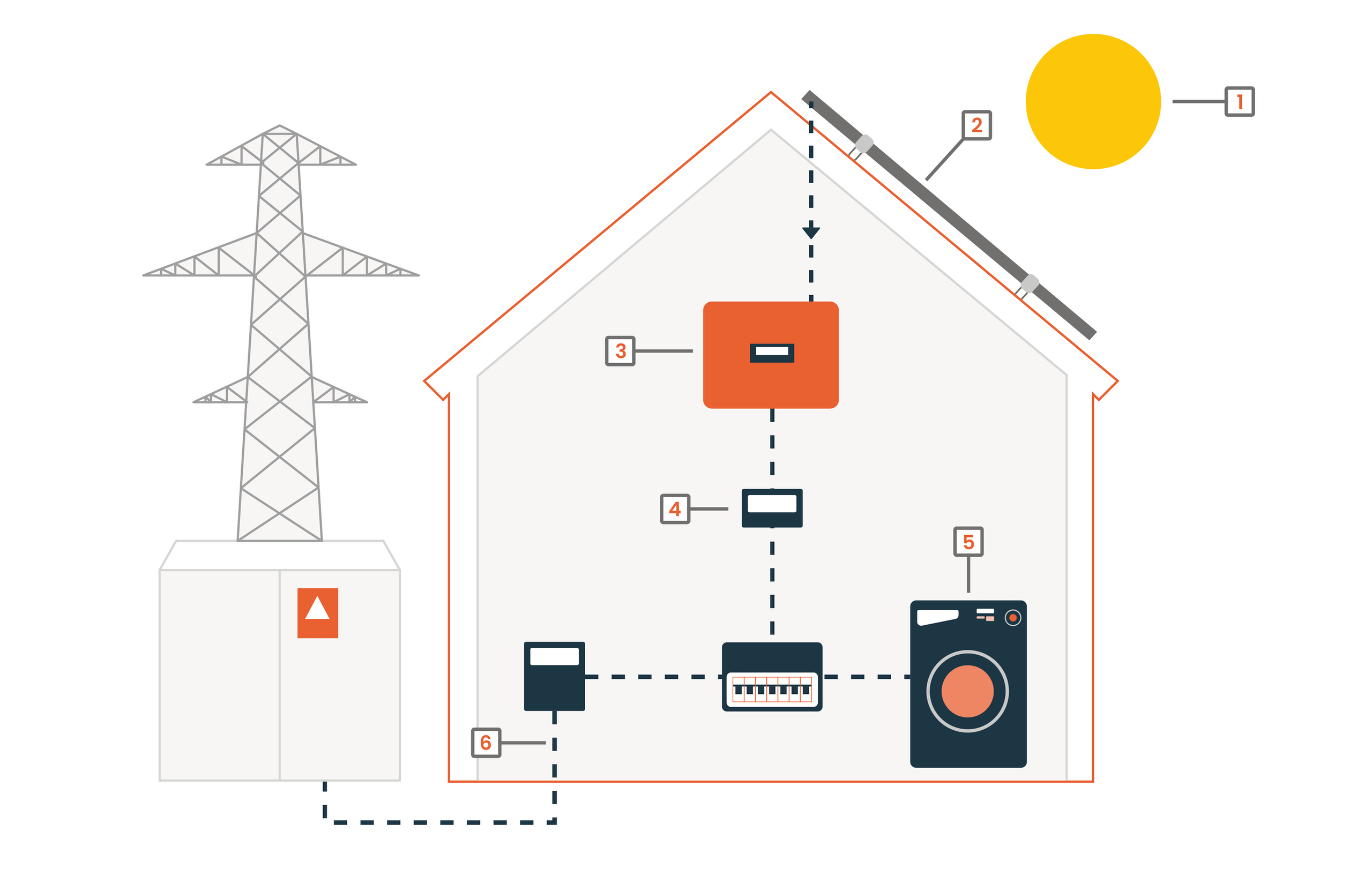
Here’s a graph which illustrates how sunlight is turned into solar energy to power the home.
(hover over the numbers for a description)
Light
The sun gives off light, even on cloudy days
The panels
Solar Photovoltaic (PV) cells on the panels turn the light into DC electricity
The inverter
The current flows into an inverter, which converts it to AC electricity ready to use
The electricity
The current is fed through a meter and then into your home's consumer unit. The meter will measure all of the electricity generated by the solar PV system
Powering the home
Plug in and switch on. Your system will automatically use the free electricity you've generated, then switch back to the grid as needed
The National Grid
Any electricity you don't use is exported to the grid for others to use
Eco2Solar Ltd
Summerfield House Arthur Drive Hoo Farm Industrial Estate Kidderminster, Worcestershire DY11 7SL